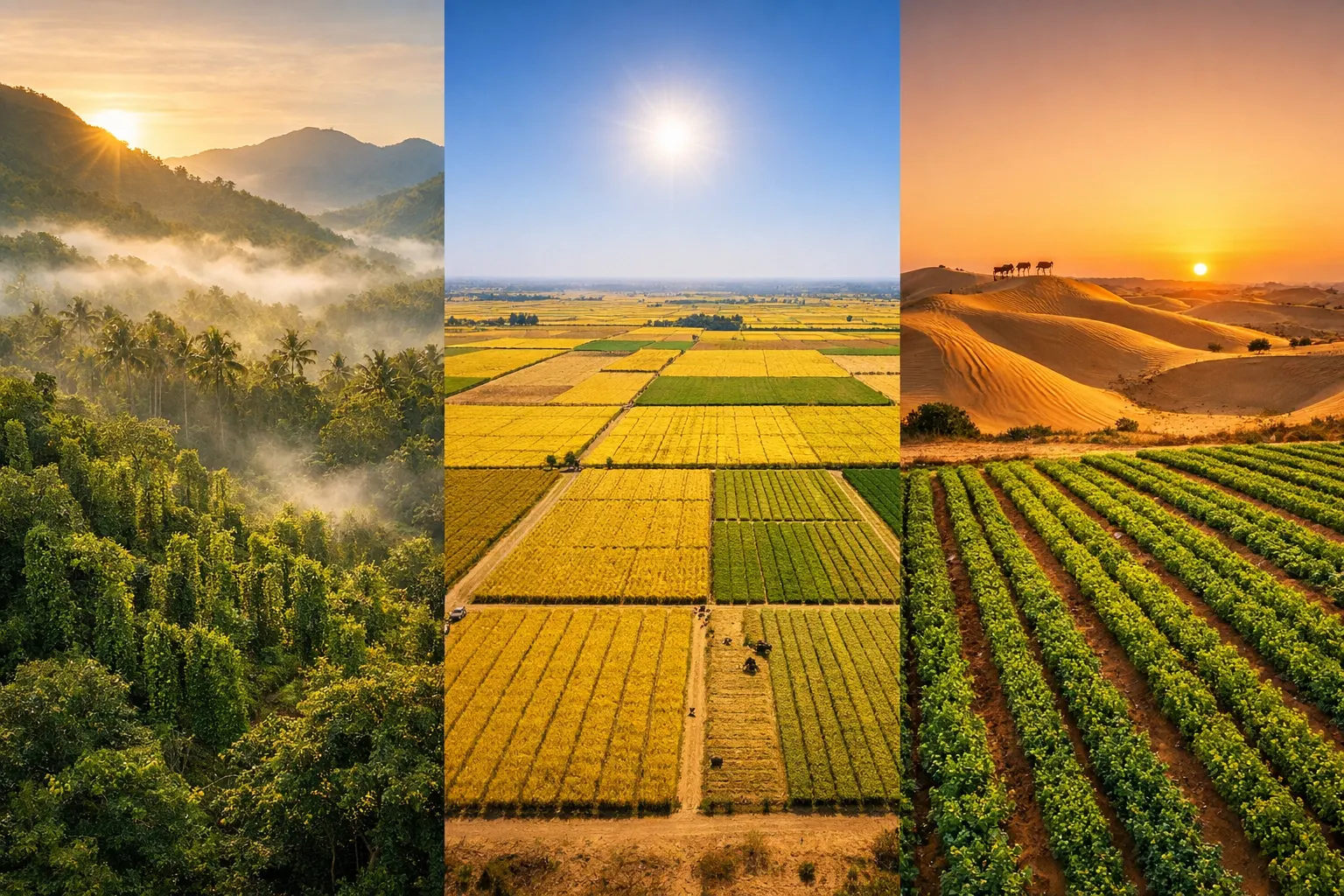
Kerala vs Gujarat vs Rajasthan: The Great Indian Spice Showdown (2026)
Three regions. Three climates. Three export superpowers.
After 12 years sourcing from every mandi, here’s what no one tells you about choosing your spice origin for maximum profit.
✓ APEDA Certified ✓ 50+ Mandi Partnerships ✓ 12 Years Export Experience ✓ 10,000+ Tons Sourced
In 2013, I stood in Kerala’s Kumily market at 4 AM, watching a farmer unwrap peppercorns that smelled like liquid gold. Three days later, I was in Gujarat’s Unjha mandi, surrounded by cumin bags taller than me, the air thick with earthy warmth. Then Rajasthan’s Jodhpur corridor—coriander fields stretching into desert horizons.
That’s when I realized: there is no ‘best’ Indian spice region. There’s only the right region for your specific export goal—and choosing wrong can cost you ₹5 lakhs in quality mismatches.
India is the global spice powerhouse—exporting ₹1.25 trillion annually. But Kerala, Gujarat, and Rajasthan represent three distinct spice ecosystems. Choose wrong, and you face quality shocks, pricing volatility, and supply instability. Choose right, and you unlock premium positioning, consistent margins, and buyer loyalty that lasts decades.
🔑 Key Insight: Kerala wins on aroma intensity. Gujarat dominates volume consistency. Rajasthan offers pricing agility. Smart importers diversify across all three—I’ll show you the exact 70-20-10 strategy we use.
⚡ Quick Answers:
🌿 Kerala: Best for premium pepper & cardamom?
🌾 Gujarat: Where to source bulk cumin?
🌵 Rajasthan: Cheapest coriander supplier?
📊 Compare: Side-by-side feature table
🏆 Winner: Which region for my product?
🌍 2026 Trends: Export market shifts
🌿 Kerala – The Tropical Spice Capital of India
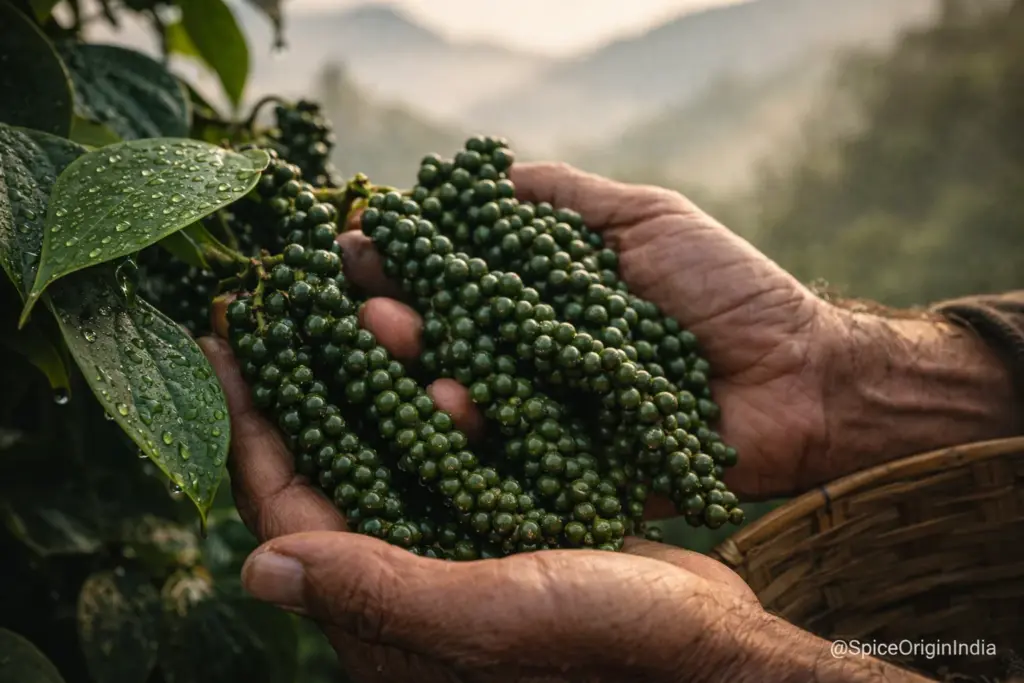
The Experience: Kerala’s Western Ghats create a 100% humidity, 2000mm rainfall microclimate that forces plants to produce defensive oils—what we call ‘aromatic intensity’ that survives shipping.
This isn’t farming. This is spice alchemy.
Key Spices from Kerala:
- Black Pepper: Malabar & Tellicherry grades (8-10% piperine—industry highest)
- Small Cardamom: Alleppey Green (2.5% volatile oil minimum)
- Ginger: Cochin variety—dried and preserved
- Turmeric: Alleppey finger (4.5% curcumin vs. 3% standard)
- Cloves & Nutmeg: High eugenol content for pharmaceutical use
🏆 Why Kerala Commands Premium Pricing (20-40% Above Market)
🧪 Science: High essential oil content (2-3x other regions)
👃 Sensory: Aroma intensity that survives 90-day shipping
🌱 Cultivation: Plantation-based (quality control)
🌍 Market: Gourmet & medicinal buyers pay 40% premiums
“Kerala pepper changed our product line. The aroma profile is unmistakable—our US buyers specifically request Malabar grade now and pay premium without negotiation.”
— European Spice Buyer, 2024
🌾 Gujarat – The Seed Spice Empire (70% Market Control)
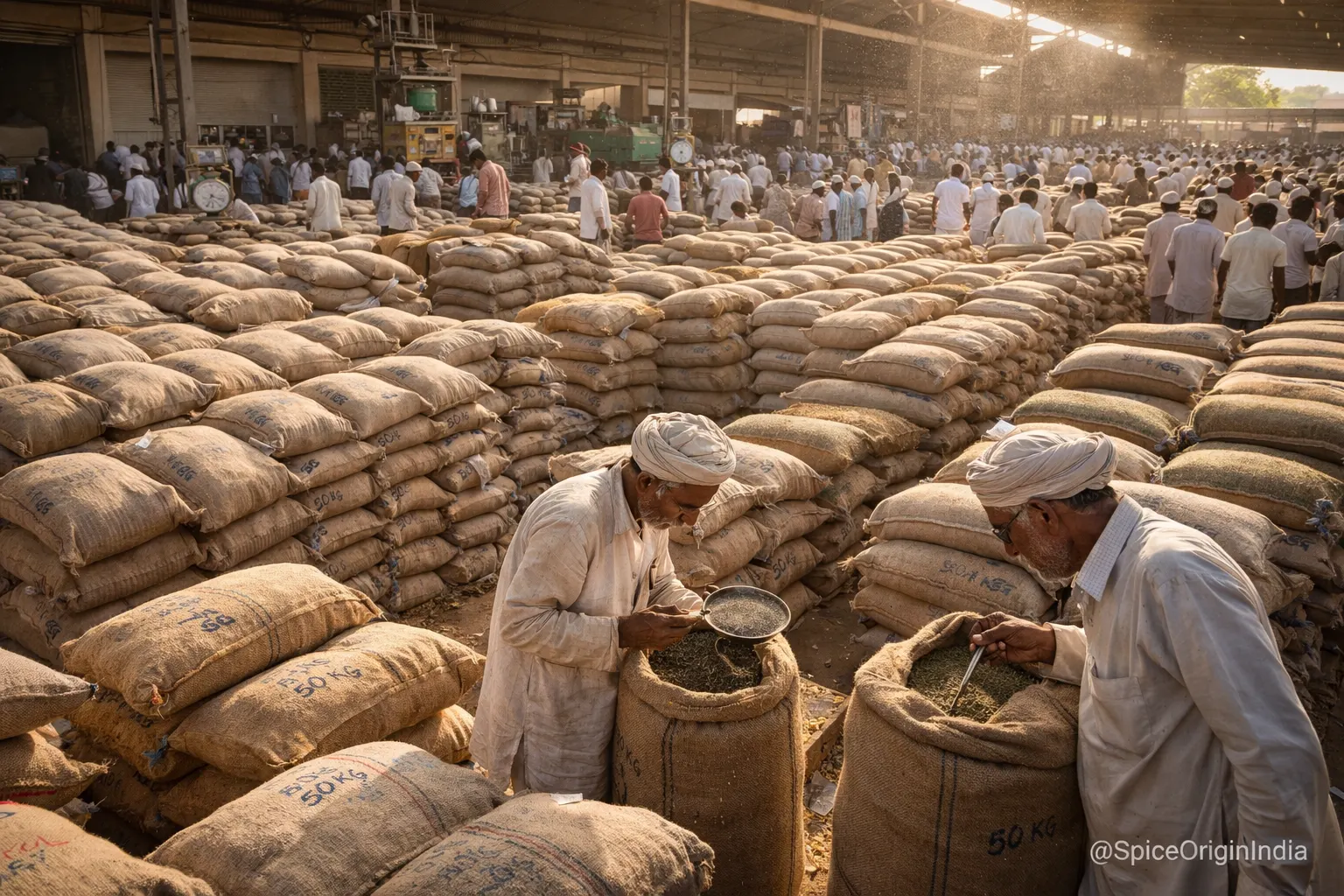
The Scale: Gujarat doesn’t just produce cumin—it controls the global market. When Gujarat sneezes, the Middle East’s curry industry catches a cold.
Unjha mandi alone processes 200,000 tons of cumin annually. That’s not a market. That’s infrastructure that ensures zero supply disruption.
Key Spices from Gujarat:
- Cumin (Jeera): 70% of India’s total production—global price setter
- Fennel (Saunf): Export-grade sizing consistency (EU standard)
- Coriander: Split and whole varieties for different markets
- Garlic: Dehydrated and powder processing facilities
- Fenugreek: Pharmaceutical-grade supply for supplement industry
⚡ Why Gujarat Dominates Export Markets
| Factor | Gujarat Advantage |
|---|---|
| Scale | 500,000+ farmers in organized FPOs |
| Processing | ISO-certified cleaning/sorting facilities |
| Logistics | Mundra Port proximity (3-day shipping to Dubai) |
| Quality Control | Automated grading, moisture control (99.2% consistency) |
🌵 Rajasthan – The Rising Spice Frontier (300% Growth)
🔥 The Opportunity: While everyone fights over Kerala’s premium and Gujarat’s volume, smart buyers are quietly building supply chains in Rajasthan—and locking in 8-12% cost advantages before the market catches on.
Rajasthan offers what Gujarat offered 15 years ago: competitive pricing, growing infrastructure, and hungry suppliers who prioritize your business with flexible terms.
🚀 Growth Metrics (2018-2024)
- Coriander: 300% acreage increase
- Cumin: New processing plants in Jodhpur corridor
- Organic certification: Fastest growth in India (govt subsidies)
💰 Pricing Advantage
- 8-12% lower than Gujarat for comparable grades
- Flexible MOQs (accept 5-ton orders vs. 20-ton Gujarat minimum)
- Government subsidies for export infrastructure
Key Spices from Rajasthan: Coriander (specialty), Cumin (emerging), Garlic, Fenugreek. Rajasthan is especially dominant in coriander production, making it the go-to for bulk spice traders seeking pricing agility.
📊 Kerala vs Gujarat vs Rajasthan: The Complete Comparison (Save This)
Bookmark this table. Print it. Share it with your procurement team. This is the exact decision framework we use at SpiceOrigin India for every client sourcing strategy—updated for 2026 market conditions.
| Decision Factor | 🌿 Kerala | 🌾 Gujarat | 🌵 Rajasthan |
|---|---|---|---|
| Primary Spices | Black Pepper, Cardamom, Cloves, Nutmeg | Cumin (70% India), Fennel, Coriander | Coriander (specialty), Cumin, Fenugreek |
| Climate | Tropical (2000mm rainfall, 100% humidity) | Semi-arid (800mm, controlled irrigation) | Arid Desert (<500mm, drip irrigation) |
| Quality Positioning | Premium / Gourmet (8-10% piperine) | Export Grade / Consistent (99.2%) | Bulk / Value (8-12% cost savings) |
| Best For Buyers Who… | Need aroma intensity & premium branding | Require volume consistency & fast shipping | Want competitive pricing & growth partnerships |
| Price Tier (per kg) | ₹₹₹ Premium (20-40% above market) | ₹₹ Standard Export | ₹ Competitive (8-12% below Gujarat) |
| 2026 Growth Outlook | Stable (limited land expansion) | Mature (processing innovation) | High (infrastructure investment) |
| Minimum Order (MOQ) | 1-2 tons (flexible) | 20+ tons (volume focus) | 5-10 tons (startup-friendly) |
| Best Export Markets | USA, Europe (gourmet), Pharma | Middle East, Europe (bulk), USA | Domestic, Emerging markets, Africa |
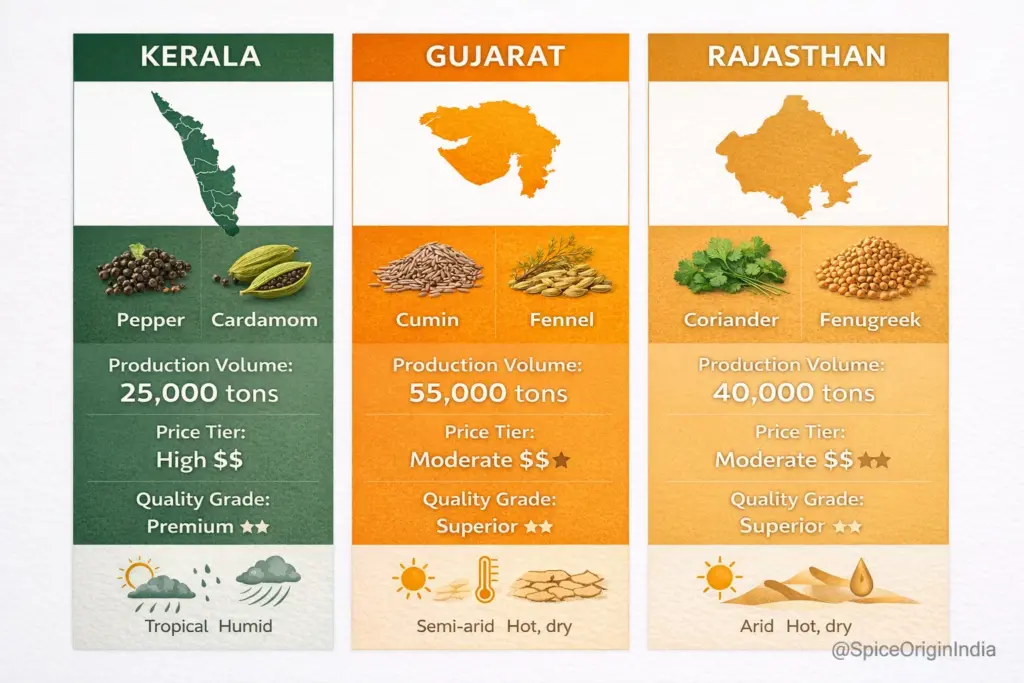
🏆 Which Region Is Right for YOUR Business? (Decision Tree)
✅ Choose Kerala If You…
- Sell to gourmet food brands or pharmaceutical companies (need certification)
- Need aroma intensity as your unique selling proposition (premium positioning)
- Can absorb 20-40% premium pricing for quality differentiation (high margins)
- Buyers specifically request Malabar pepper or Alleppey cardamom (brand recognition)
✅ Choose Gujarat If You…
- Need consistent 50+ ton monthly supply (volume stability)
- Buyers prioritize shipping speed (Middle East, Europe—3-day delivery)
- Require ISO-certified processing for retail packaging compliance
- Sourcing cumin, fennel, or coriander seeds (seed spice focus)
✅ Choose Rajasthan If You…
- Are a growing business with limited capital (cost-conscious)
- Want to negotiate flexible terms with suppliers (relationship building)
- Sourcing coriander (Rajasthan’s specialty—300% growth)
- Value long-term partnership growth over immediate volume
💡 Pro Strategy (We Use This): Most successful exporters use a 70-20-10 split:
- 70% Gujarat = Volume stability and consistency
- 20% Kerala = Premium product lines and brand differentiation
- 10% Rajasthan = Price-sensitive markets and experimentation
This diversification strategy has saved multiple exporters during regional crop failures (2022 Gujarat drought, 2023 Kerala floods).
🔮 2026 Spice Export Trends: What’s Changing (Be Prepared)
🌱 Sustainability Pressure
EU buyers now demand carbon footprint documentation. Kerala’s small plantations have advantage—easier to certify organic and fair trade. Action: Get Kerala organic certification for EU market access.
🤖 Processing Innovation
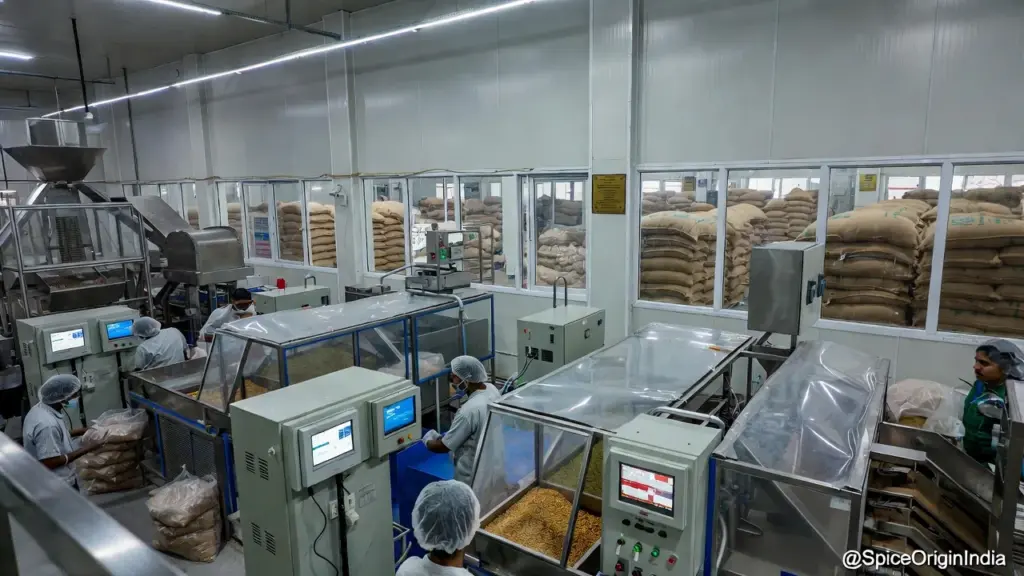
Gujarat is investing in AI-powered sorting—removing human error in grading. This means 99.9% consistency for export. Action: Lock in Gujarat suppliers with new tech for competitive advantage.
💧 Water Scarcity Shifts
Rajasthan’s drip irrigation expansion is making spice farming viable in new areas. Watch for cumin production doubling by 2027. Action: Establish Rajasthan relationships now before prices rise.
🔗 Explore: Direct Sourcing from Each Region
Ready to source? Our regional expertise goes deeper. Explore specific products with live pricing:
❓ Frequently Asked Questions
Which Indian state produces the best quality black pepper?
Kerala produces India’s premium black pepper, specifically the Malabar and Tellicherry grades. The Western Ghats’ tropical climate creates higher piperine content (8-10%) and richer aroma profiles compared to Karnataka or Tamil Nadu alternatives. For gourmet or pharmaceutical use, Kerala is unmatched. For standard commercial pepper, other regions offer competitive pricing but lower intensity.
Is Gujarat or Rajasthan better for sourcing cumin?
Choose Gujarat for established volume and quality consistency—it produces 70% of India’s cumin with ISO-certified processing and 3-day shipping to Dubai. Choose Rajasthan for pricing advantages and growth partnerships—it’s 8-12% cheaper and suppliers are more flexible with 5-ton minimum orders vs. Gujarat’s 20-ton requirement. Many smart importers use both: Gujarat for baseline supply, Rajasthan for cost optimization.
Why is Kerala cardamom more expensive than other regions?
Three factors drive Kerala’s premium: 1) Volatile oil content (2.5% minimum vs. 1.8% elsewhere, meaning stronger flavor), 2) Labor-intensive harvesting (hand-picked at specific ripeness vs. machine harvesting), and 3) Limited supply (Western Ghats geography restricts expansion). For buyers, this means stronger flavor impact at lower usage rates—often reducing overall cost per recipe despite higher upfront pricing.
Can I mix sourcing from all three regions?
Absolutely—and we recommend the 70-20-10 strategy. Diversification reduces climate risk (2022 Gujarat drought, 2023 Kerala floods) and price volatility. Our clients typically use: Kerala for premium product lines (20% of volume), Gujarat for core supply (70%), and Rajasthan for price-sensitive markets and experimentation (10%). This strategy has saved multiple exporters during regional crop failures.
Which region is best for organic spice certification?
Kerala leads in organic certification due to small plantation sizes and traditional farming methods. However, Rajasthan is growing fastest (300% increase) due to government subsidies for organic conversion. Gujarat focuses less on organic and more on volume consistency. For EU and USA organic markets, prioritize Kerala. For cost-competitive organic, explore Rajasthan’s emerging certified farms.
Ready to Source from India’s Best Spice Regions?
Don’t guess. Get a free sourcing strategy session with our regional experts. We’ll analyze your product needs, budget, and timeline—then recommend the exact region (or mix) for maximum profit.
Written by the SpiceOrigin India Sourcing Team
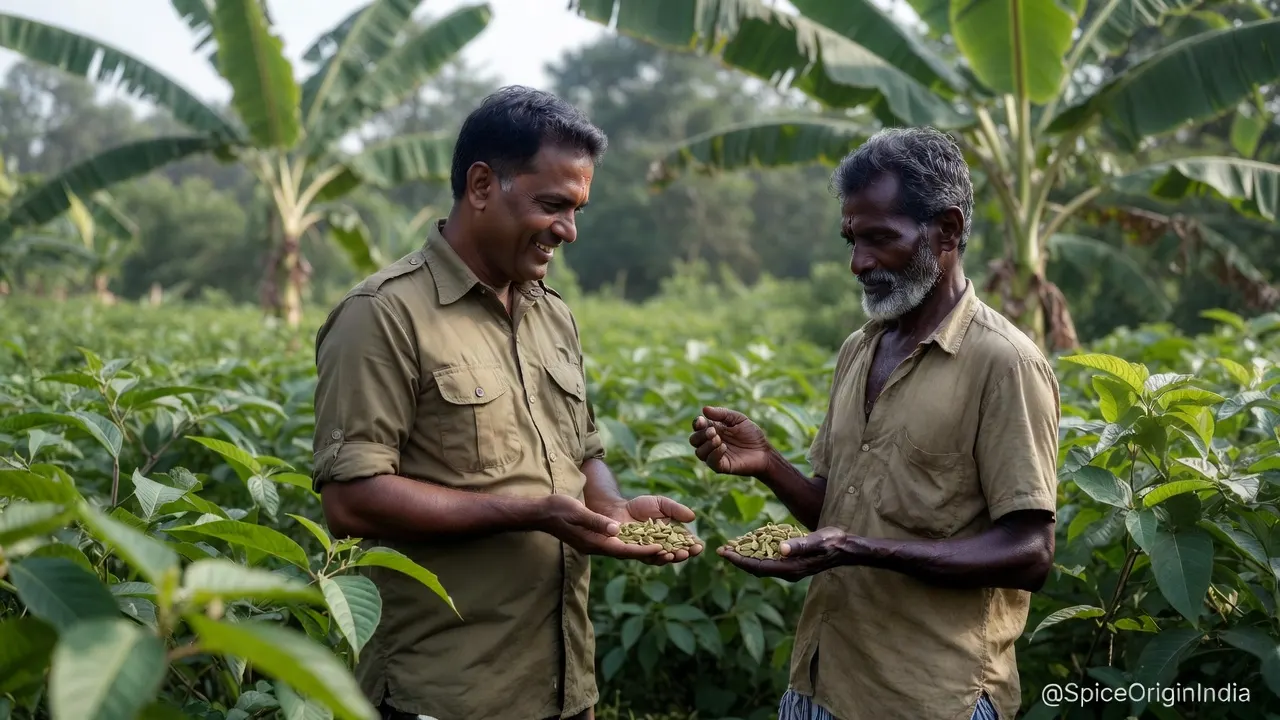
12 years sourcing from 500+ mandis across India. We’ve walked the pepper vines of Kerala at dawn, negotiated in Gujarat’s Unjha market chaos, and watched Rajasthan’s coriander fields bloom in desert heat. This guide reflects what we’ve learned failing, succeeding, and building relationships with farmers, processors, and exporters since 2012.
Credentials: APEDA-registered export house | Spices Board of India member | Organic certification handlers | 10,000+ tons sourced | Featured in Spice Board Annual Report 2023