India remains the undisputed global powerhouse of spices. In 2026, its dominance in the international market has reached new heights, driven by a global shift toward organic wellness and authentic ethnic cuisines. With unmatched biodiversity and advanced processing tech, Indian spice exports are not just a trade—they are a global standard.
This comprehensive guide provides updated Indian spice export data, top products, HS codes, and market insights specifically for buyers and investors in the USA, UK, Canada, and the Middle East.
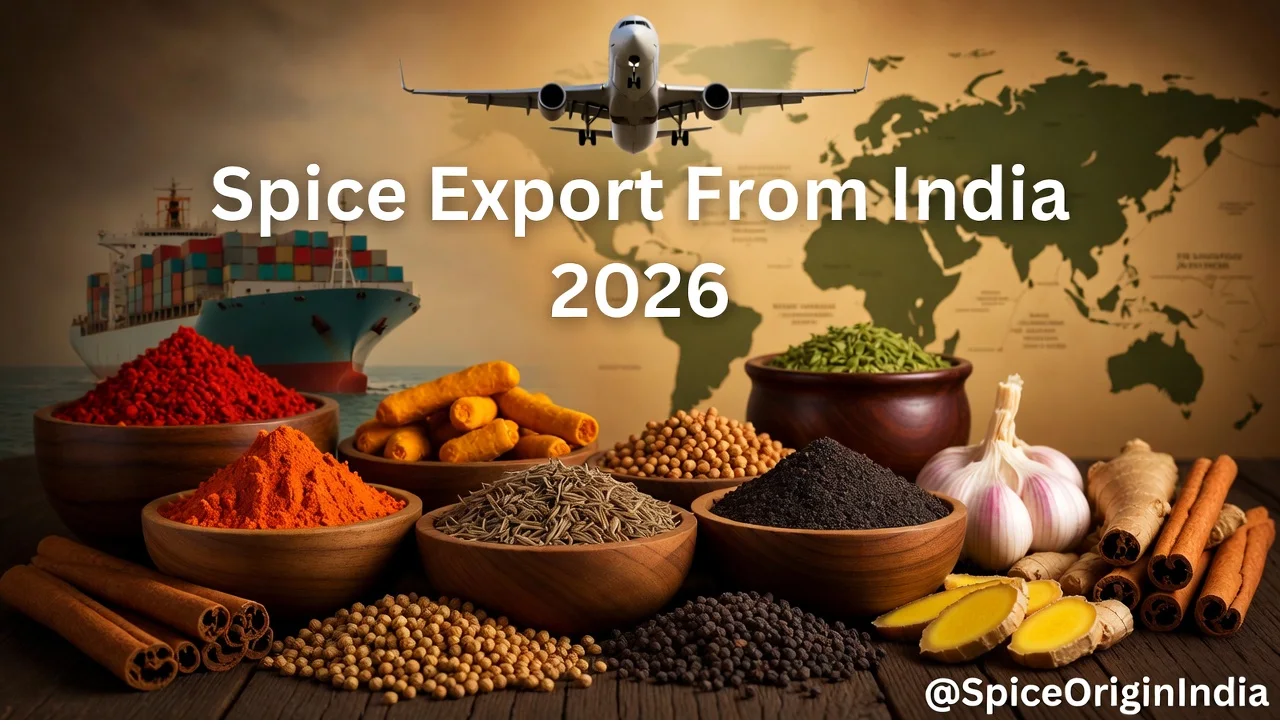
Key Highlights of Spice Export From India (2026)
- Global Market Share: India accounts for over 40% of global spice production, yielding approx. 11 million metric tonnes annually.
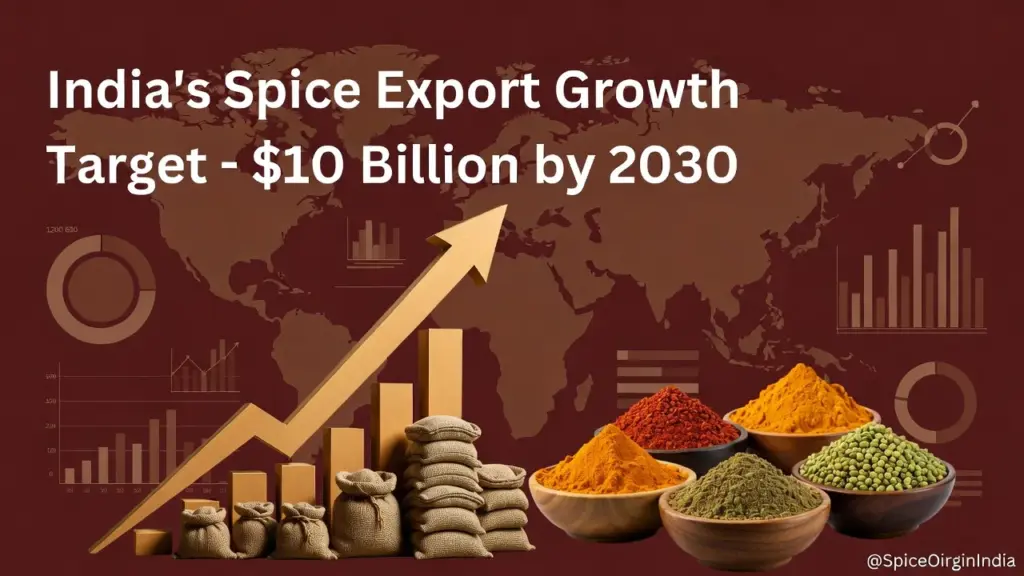
- Historic Revenue: Spice exports crossed USD 4.72 billion in the last fiscal year, with a projected target of USD 10 billion by 2030.
- Volume Growth: India exported 17.99 lakh metric tonnes of spices, marking a 17% YoY volume increase.
- Leading Hubs: The USA remains the largest value importer, while the UAE (Dubai) serves as the primary redistribution hub for the Arabic world.
- New Standards: As of January 1, 2026, new official certification requirements are in place for exports to the UK, emphasizing residue-free and high-quality processing.
Why India Dominates the Global Market
India is the world’s largest producer, consumer, and exporter of spices. International buyers from Canada to Saudi Arabia prefer Indian origin due to:
- High Essential Oil Content: Indian spices like Malabar Black Pepper and Alleppey Turmeric offer superior aroma and flavor density.
- Diverse Agro-Climatic Zones: From the cool hills of Kerala (Cardamom) to the arid plains of Rajasthan (Cumin).
- Advanced Traceability: 2026 sees the full implementation of “Farm-to-Container” tracking, meeting strict FDA (USA) and EU standards.
- Organic Surge: A 12% annual increase in demand for certified organic spices from North America and Europe.
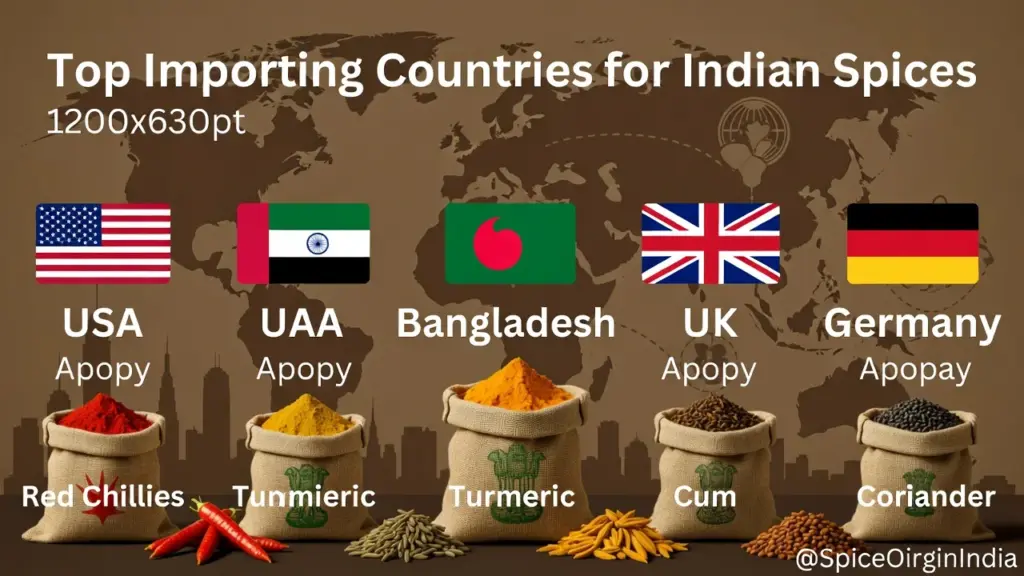
Top Spices Exported From India & Target Markets
| Spice Product | Key Markets | 2026 Export Trend |
| Cumin & Coriander | UAE, Saudi Arabia, USA | High demand for Arabic “Baharat” & “Za’atar” blends. |
| Turmeric (High Curcumin) | USA, Canada, Germany | Massive growth in the wellness & nutraceutical sector. |
| Red Chilli (Whole/Powder) | China, Bangladesh, UAE | Shift toward stemless, uniform pungency for food processing. |
| Cardamom (Small/Green) | Saudi Arabia, Kuwait, UAE | Essential for Arabic Qahwa (Coffee) and luxury desserts. |
| Black Pepper | USA, UK, Canada | Preferred for high piperine content (>6%). |
| Spice Oils & Oleoresins | USA, Europe | Used in high-end food flavoring and fragrances. |
Spices Export From India: FY 2024–25 Analysis
The recent fiscal year was a turning point for Indian agri-exports.
| Metric | Data |
| Total Export Value | USD 4.72 Billion |
| Export Volume | 17.99 Lakh Metric Tons |
| Top Exported Spice | Chilli (followed by Cumin and Turmeric) |
| Major Importing Region | Middle East & North America (38% combined share) |
| Leading Exporting State | Gujarat & Rajasthan |
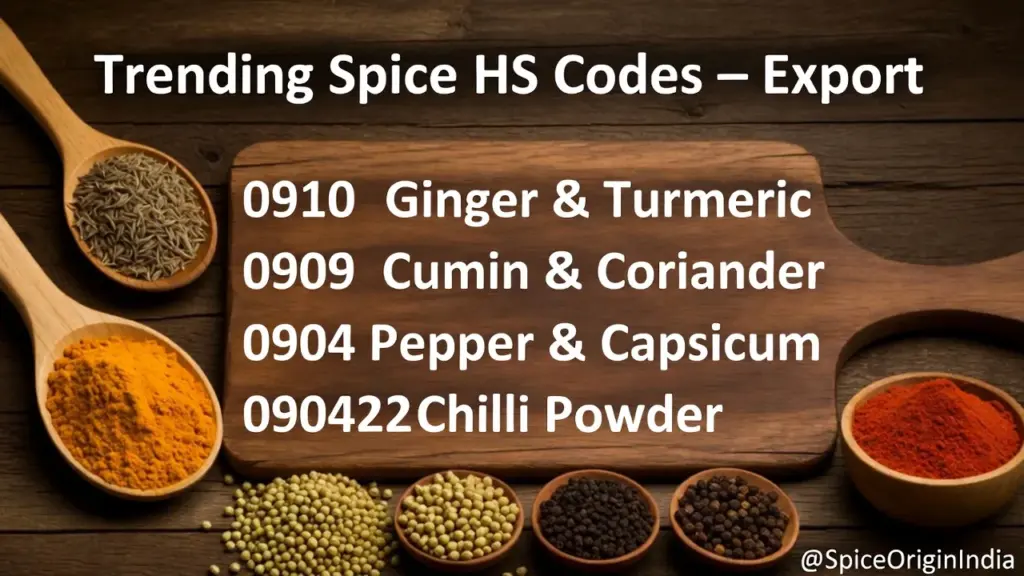
Trending Spices HS Codes for 2026
For global importers, using the correct HS Code is vital for customs clearance.
- 0904: Pepper (Black/White), Genus Capsicum (Chillies).
- 0908: Nutmeg, Mace, and Cardamoms.
- 0909: Seeds of Anise, Badian, Fennel, Coriander, and Cumin.
- 0910: Ginger, Saffron, Turmeric (Curcuma), Thyme, Bay Leaves, and Curry.
- 091030: Turmeric (Curcuma) – High Search Volume.
- 091011: Ginger (Neither crushed nor ground).
Top 10 Spice Exporters in India (2026)
- Shri Sagas Connect Pvt Ltd
- Nik May Exports LLP
- VNS Food LLP
- Spice Origin India Exports
- Sai Shagun Food Industries Pvt Ltd
- Vad Industries
- Viral Spices
- Pisum Food Services
- Nani Agro Foods
- Vacco Exports
Targeting Global Markets: USA, UK, Canada & Arabic Countries
To successfully export to these high-value regions in 2026, exporters must focus on:
- Arabic Countries (GCC): Focus on Halal Certification and bulk supply of Cardamom and Cumin. Dubai is the gateway; participating in Gulfood is essential.
- USA & Canada: Strict adherence to FSMA (Food Safety Modernization Act). High demand for retail-ready, “Clean Label,” and Organic certified powders.
- United Kingdom: New 2026 regulations require Official Certificates for many spice categories. Ensure your lab reports are from Spices Board-empanelled laboratories.
Mandatory Documents for Export
- IEC (Importer Exporter Code)
- RCMC from the Spices Board of India
- FSSAI License (Central License for Exports)
- Phytosanitary Certificate
- Certificate of Origin (Essential for FTA benefits in countries like UAE)
How to Find Verified International Buyers
- Export-Import Intelligence: Analyze shipment data to find active buyers in Canada and the US.
- Digital Presence: Ensure your website (like spiceoriginindia.com) is optimized for international SEO.
- Trade Fairs: Engage in virtual and physical expos organized by the Spices Board and APEDA.
Expert Tip: In 2026, buyers aren’t just looking for the lowest price; they are looking for Traceability and Quality Assurance. Highlighting your “Farm-to-Fork” process is your biggest competitive advantage.
Official Source To Know Moare Read Here Indian Spices
 Inquire for Bulk Export (WhatsApp)